What Is Public Cloud? A Beginner's Guide to Getting Started
By kushantha rangana · 2026.08.17 · 5,971 views
Sign in to like this post
What Is the Public Cloud?
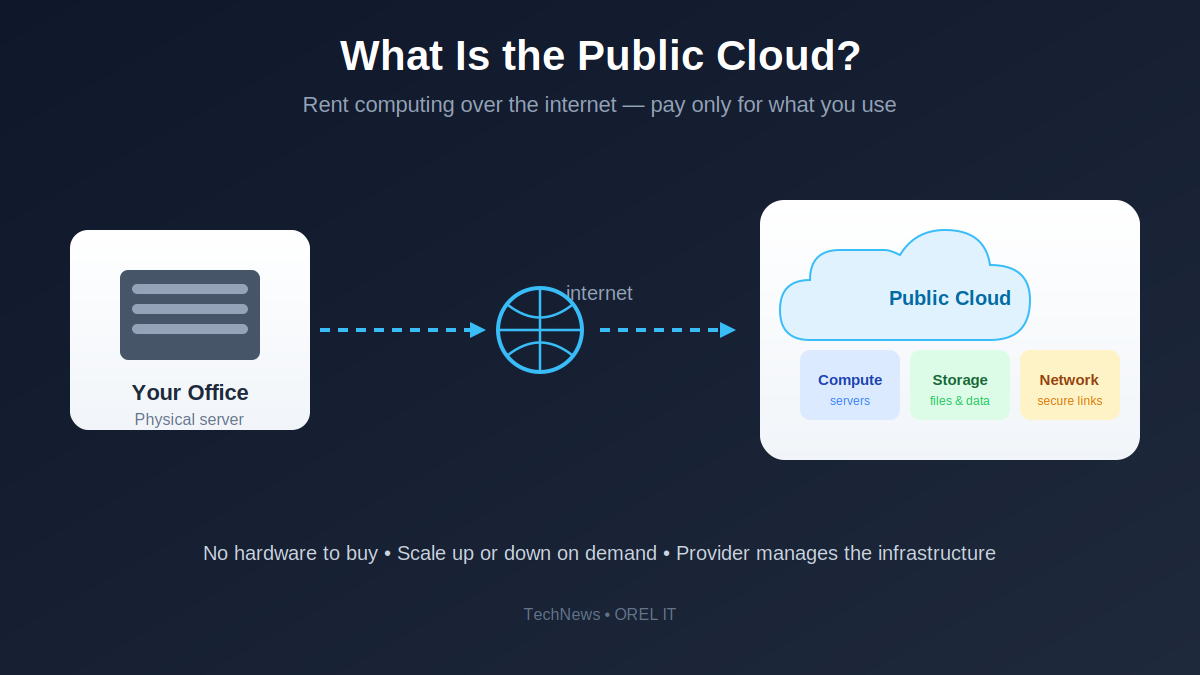
The public cloud is a model where computing resources servers, storage, and networking are owned and run by a cloud provider and delivered to you over the internet. Instead of buying physical hardware and racking it in your own office, you rent exactly what you need and pay only for what you use.
Think of it like electricity. You don't build a power plant to light the house; you plug into the grid and pay for the units you consume. The public cloud works the same way for computing.
Why Businesses Move to the Cloud
No upfront hardware cost. There's no need to purchase servers, storage arrays, or networking gear. You avoid the large capital expense and start with a predictable monthly cost instead.
Scale up or down on demand. When traffic spikes, you add resources in minutes. When it drops, you scale back down and stop paying for what you don't need. Physical servers can't do this; you're stuck with whatever you bought.
Managed infrastructure. The provider handles the data center, power, cooling, and hardware maintenance. Your team focuses on applications instead of babysitting hardware.
Core Building Blocks
Most cloud journeys start with three fundamentals: compute (virtual servers that run your applications), storage (space for your files, databases, and backups), and network (the private, secure connections that tie everything together and control access).
Public, Private, and Hybrid
Not all cloud is the same. A public cloud shares infrastructure across many customers securely. A private cloud is dedicated to a single organisation. A hybrid cloud combines both, keeping sensitive workloads private while using the public cloud for flexibility. Many businesses in Sri Lanka choose hybrid to balance control and cost.
Where to Start
You don't need to migrate everything at once. Most teams begin with a single test workload a website or an internal app spin it up on a cloud server, and learn the basics before moving anything critical. This week we'll build on this foundation, so keep an eye on the community pages for hands-on questions and answers.
Comments (0)
No comments yet. Be the first!
Related Posts


Stay Updated
Get the latest tech news delivered to your inbox.